
Institute for DMN and Trauma Research (IDTR)
Exploring the role of the DMN in maintaining trauma-related patterns

- About
Institute for DMN and Trauma Research
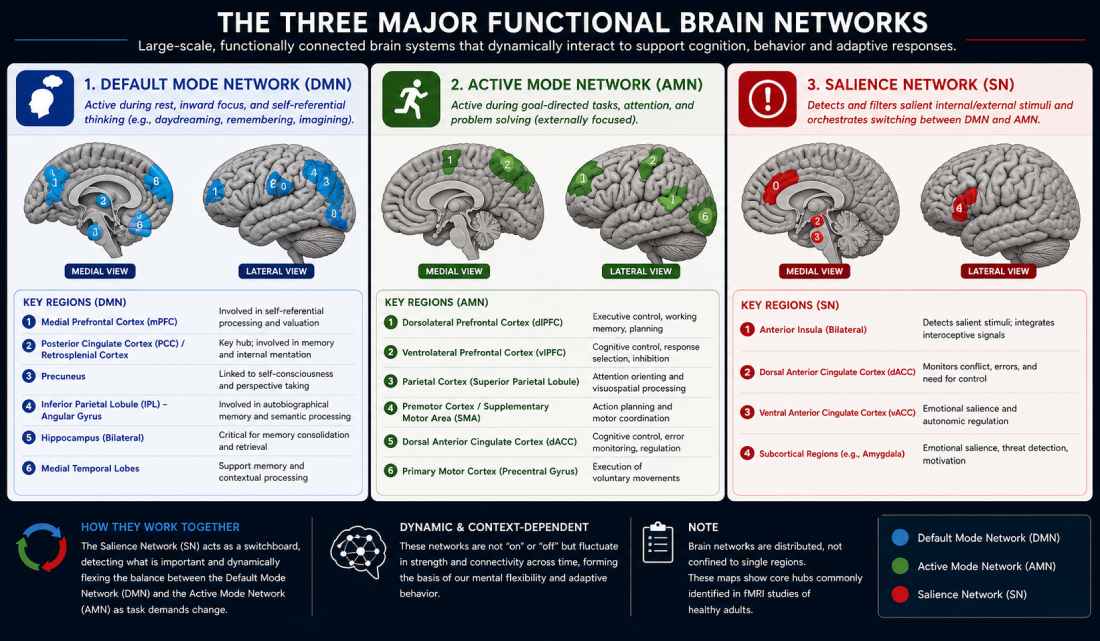
The IDTR is dedicated to advancing our understanding of how early complex trauma interacts with the brain’s default mode network (DMN) to shape self-sustaining maladaptive schemas, which resist long-term recovery trajectories.
Our focus is on bridging the gap between the client’s own experience of their inner space, neuroscience and clinical practice to inform interventions that support durable psychological change.
Our Mission
To investigate the neural and cognitive mechanisms underpinning trauma persistence and recovery, and to translate these findings into practical guidance for clients, therapists and researchers working with early complex trauma.
Research Focus
- Exploring the role of the DMN in maintaining trauma-related self-referential patterns.
- Examining neuroplastic pathways that enable schema updating and adaptive self-model integration.
- Translating research findings into evidence-informed guidance for clinical practice.
Collaboration and Engagement
We aim to connect researchers, clinicians, and educators interested in long-term trauma recovery and neuroplasticity-informed interventions. IDTR shares updates, insights, and resources through our LinkedIn page and Substack newsletter.
Get Involved
Follow IDTR to stay informed about new research, practice guidance, and collaborative opportunities in trauma recovery and DMN-focused work.

Healing Early Complex Trauma
Through clinical observation and research, I realised that many of my clients, who had treatment resistant symptoms, had in fact suffered from Early Childhood Trauma. This fact is often missed.
In order to help my clients achieve long-term healing, I developed DMN-Informed Neuroplastic Schema Therapy (DMN-I NST), a unique integration of network neuroscience, Cognitive and Dialectical Behavioural Therapy and schema therapy with practical mind-body exercises to retrain the automatic patterns that drive anxiety, depression and other forms of psychological distress by targeting the Default Mode Network: the part of your brain responsible for most symptoms of psychological suffering.
Unlike traditional therapy, that only addresses surface symptoms, this approach works at the neurological level – creating lasting structural change in how your brain processes experience.
A New Integrative Approach
DMN-Informed Neuroplastic Schema Therapy (DMN-I NST)
Reconceptualising Trauma and Change – an Extension of Schema Therapy
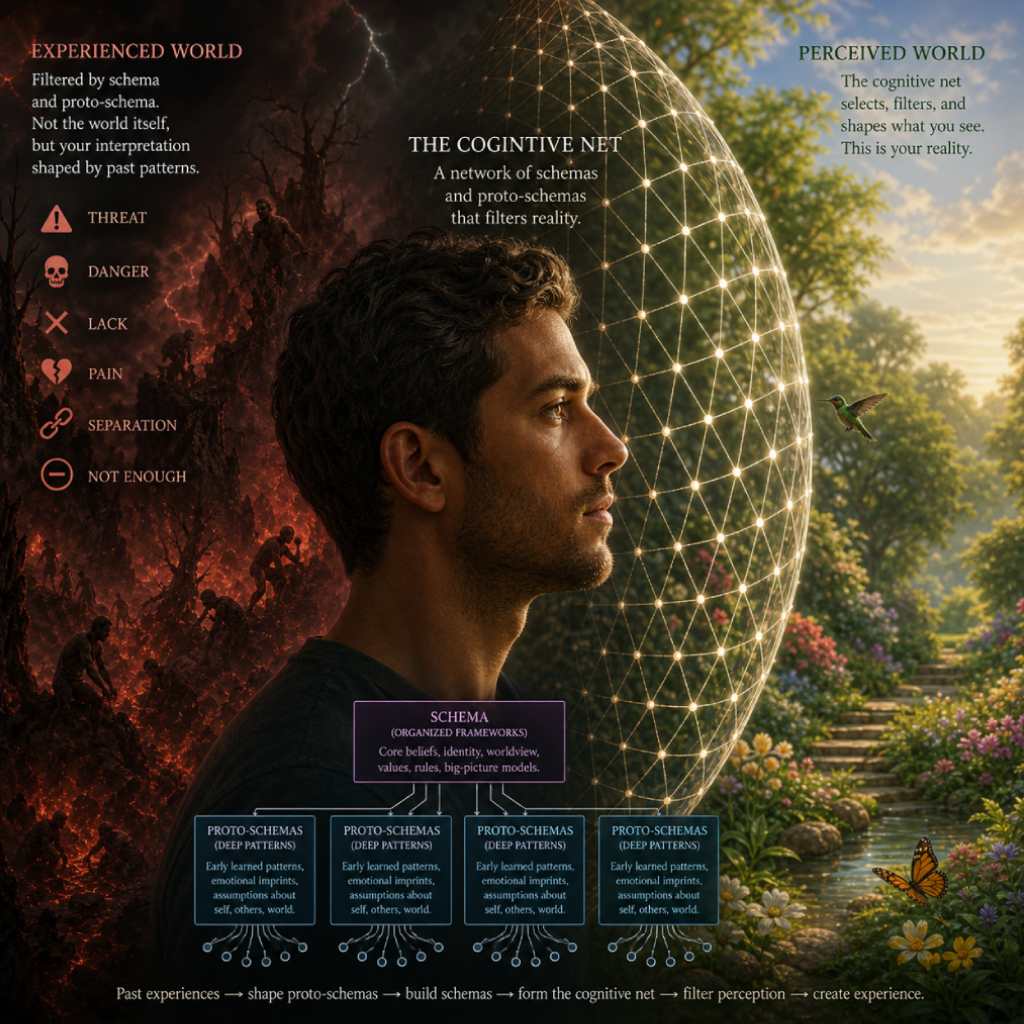
This paper proposes DMN-Informed Neuroplastic Schema Therapy (DMN-I NST) as an integrative, extension of schema therapy that focuses on DMN plasticity and regulation in the context of the healing of the pre-linguistic, pre-conceptual self-model. The formulation is contingent upon preparatory training and practice of structured somatic and cognitive exercises that are designed to reduce maladaptive DMN dominance and restore neuroplasticity. Neuroplasticity enables the client to canalise new modes of perceiving and inhabiting experience.
The schema is seen as a conscious and sub-conscious framework of feelings, assumptions and beliefs that together constitute a mode of perceiving and inhabiting the world. The schema sits above, cognitively speaking, the unconscious pre-linguistic, pre-conceptual self-model that is so vulnerable to early complex trauma.
The Path Forward begins with
One conversation!
Your first consultation is completely free. No pressure, no commitment – just a chance to talk and see if you think I can help you.